


26 May 2026 07:52 UTC - by Editorial Team
Bitcoin's BVIV implied volatility index dropped to 38%, a nine-month low, as institutional buying, easing geopolitical tensions, and options selling calm the market.
➤ Historically, periods of low implied volatility have preceded significant price moves, creating opportunities for options traders but also carrying the risk of prolonged market calm.
➤ Significant accumulation by Strategy (formerly MicroStrategy) is reducing the available supply for speculative trading, contributing to lower realized volatility.
➤ Bitcoin's implied volatility has reached a nine-month low of 38% due to easing geopolitical tensions, steady institutional buying, and systematic options selling.
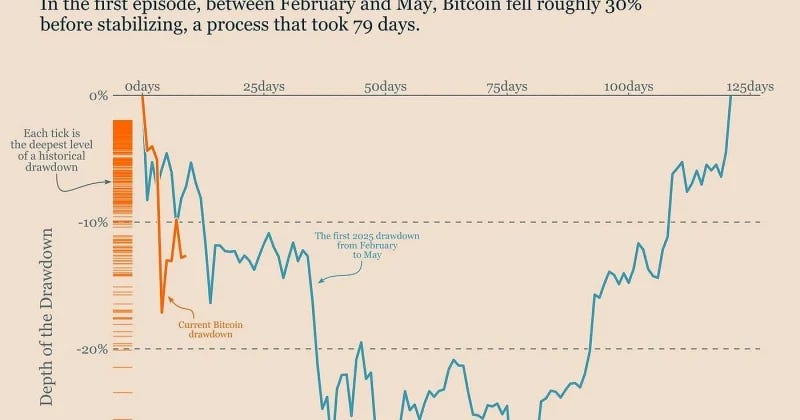
Bitcoin, the asset once synonymous with stomach-churning price swings, is having a remarkably boring stretch.
The Bitcoin Volatility Index, known as BVIV, has fallen to 38% annualized as of May 22, a level not seen since October 2025. That means options traders are pricing in significantly smaller expected price moves over the next 30 days. Bitcoin itself has been trading between $77,000 and $77,300.
What’s driving the calm
Three forces are converging to drain volatility from the market. First, geopolitical tensions, particularly around Iran, have eased considerably. Shiliang Tang of Monarq Asset Management pointed to this cooling as a direct contributor to the subdued trading environment.
Second, institutional buying has been steady rather than erratic. The kind of large, programmatic accumulation happening right now doesn’t create the sharp demand spikes that send prices lurching.
Third, systematic options selling has been a persistent feature of recent weeks. When market participants consistently sell options, whether covered calls or cash-secured puts, it compresses implied volatility mechanically. More supply of options contracts means lower premiums, which translates directly into a lower BVIV reading.
WTI crude prices sitting below $100 a barrel haven’t hurt either.
Strategy’s appetite is outpacing the mines
Strategy, the publicly traded company formerly known as MicroStrategy, has acquired 171,238 BTC in 2026 alone. During that same period, Bitcoin miners have produced roughly 63,450 BTC. One company is buying nearly 2.7 times more Bitcoin than the entire mining industry is creating.
When a single entity is vacuuming up coins at a rate that dwarfs new issuance, the available float for speculative trading shrinks. Less freely circulating supply means fewer coins changing hands, which means lower realized volatility.
Why low volatility might not last
Periods of unusually low implied volatility in Bitcoin have frequently preceded significant price moves, both up and down. When volatility is cheap, options become cheap. Traders who want to bet on a big move can acquire that exposure at a discount, and when enough of them pile in, the resulting positioning can amplify the very breakout they’re betting on.
The current reading of 38% represents a meaningful compression from where BVIV spent most of early 2026. A nine-month low isn’t just a statistical curiosity. It’s the market effectively saying, “We don’t expect much to happen.”
For traders, low implied volatility means options premiums are cheap, which creates opportunities for straddle and strangle strategies designed to profit from a move in either direction. The risk is that the calm persists longer than expected, letting those positions decay.
Disclosure: This article was edited by Editorial Team. For more information on how we create and review content, see our Editorial Policy.
Categories rationale: The article focuses on the decrease in Bitcoin's volatility and the factors influencing it, aligning with 'Market Cycles & Macro Sensitivity' and 'Volatility'. Specifically, it discusses 'Market Volatility & Liquidity', 'Price Stability of Asset-Backed Tokens' (though Bitcoin is not strictly asset-backed, the concept of price stability is discussed in relation to its low volatility), and 'Influence from Crypto Market Volatility'.Characteristics justification: The article discusses a decrease in Bitcoin's volatility, indicating a period of market calm, but also highlights that such periods have historically preceded significant price moves, suggesting underlying uncertainty about future price action. The sentiment is slightly negative due to the potential for future volatility despite current calm. The entropy is high because the article discusses an unusual state of low volatility for Bitcoin, which is typically known for its high price swings. Relevance is high as it discusses a specific asset (Bitcoin) and market dynamics. Staleness is moderate as it refers to past trends and current market conditions.Tag relevance: The tags 'bitcoin', 'volatility', and 'bvix' are central to the article's topic. 'Options trading', 'institutional buying', and 'geopolitical tensions' are key drivers mentioned. 'Strategy company' and 'microstrategy' are highlighted due to their significant impact on Bitcoin supply. 'Supply' and 'market calm' summarize the current market conditions discussed.asset-types: others
rwa: false
entropy: 0.75
sentiment: -0.3
staleness: 0.4
relevance: 0.8
uncertainty: 0.6RWATimes slug: cryptobriefing-bitcoin-volatility-falls-to-nine-month-low-amid-subdued-trading-232272722