


03 Jun 2026 09:30 UTC - by MENAFN
SEC Strategic Plan Supports Digital Assets, Signals Compliance Push. The U.S. Securities and Exchange Commission has elevated digital assets to a strategic priority, signaling that comprehensive regulatory clarity around blockchain technology, tokenization and crypto
➤ Key aspects include clarifying jurisdictional boundaries between the SEC and CFTC, coordinating with international standards like MiCA, and supporting the development of on-chain financial infrastructure.
➤ The plan emphasizes a rational, coherent approach to support compliant capital formation, with a focus on reducing legal ambiguity and establishing clear oversight for custody, trading, and staking services.
➤ The SEC's draft Strategic Plan for 2026-2030 designates digital assets as a core objective, aiming to provide regulatory clarity and a firm foundation for blockchain technology and tokenization.
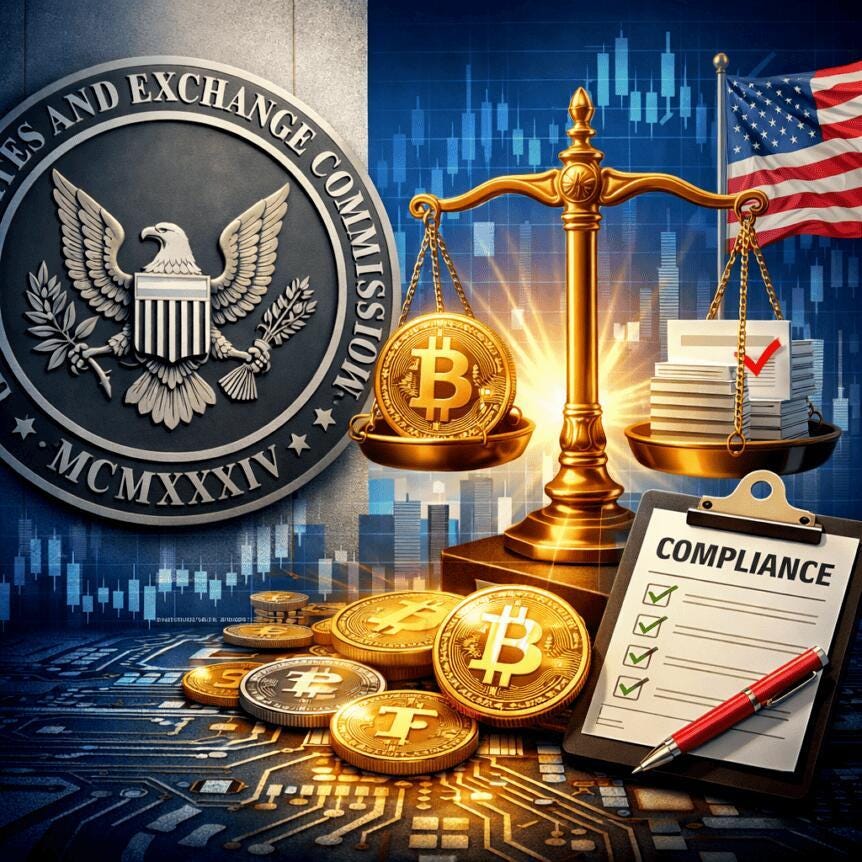
( MENAFN - Crypto Breaking) The U.S. Securities and Exchange Commission has elevated digital assets to a strategic priority, signaling that comprehensive regulatory clarity around blockchain technology, tokenization and crypto market infrastructure will be central to its agenda through 2030. The agency's forthcoming Strategic Plan for fiscal years 2026–2030 designates digital assets as a core objective alongside core mission pillars such as capital formation, investor protection and agency modernization. The plan positions the SEC as pursuing a firm regulatory foundation for digital assets and distributed ledger technology through a rational, coherent, and principled approach, underscoring a belief that blockchain and crypto asset technologies have the potential to transform America's financial infrastructure.
According to the SEC's draft Strategic Plan, the agency acknowledges that the growth of digital assets has outpaced existing regulations and emphasizes a need for greater legal certainty for market participants. It highlights tokenized offerings and on-chain financial infrastructure as areas where the SEC intends to support compliant, orderly capital formation. The document also notes that custody, trading and staking services should be able to operate under appropriate oversight without duplicative or conflicting regulatory requirements.
Related: SEC approves Paxos as 'blockchain-native' clearing agency (Paxos regulatory milestone cited in contemporaneous coverage)
Key takeaways
Strategic priorities and practical implications for the market
The draft plan frames digital assets and distributed ledger technology (DLT) as foundational to the modernization of U.S. financial markets. By articulating a“rational, coherent, and principled” approach, the SEC signals an intent to establish durable rules that can support legitimate innovation while enhancing investor protections. The emphasis on tokenized offerings and on-chain financial infrastructure points to a future where securitization, settlement, and financing arrangements may increasingly rely on programmable digital assets. For institutions, this could translate into clearer licensing expectations, more predictable custody protocols, and standardized oversight of trading venues and on-chain settlement mechanisms.
From a regulatory design perspective, the plan's call for a consistent framework-where custody, trading and staking services operate under appropriate oversight without duplicative burden-addresses a longstanding friction between fragmented rules and the need for reliable, scalable infrastructure. For exchanges and liquidity providers, the emphasis on non-duplicative regulation could influence registration pathways, product approvals, and ongoing compliance obligations. For banks and institutional clients, clearer standards around custody and on-chain activity may affect risk management, auditability, and interoperability with traditional payment rails and settlement systems.
The plan also reiterates a broader objective: to provide regulatory certainty that supports compliant capital formation in the digital asset space. Tokenized offerings, which enable traditional assets to be represented on-chain, could become more common if the SEC can articulate clear requirements for disclosure, governance and investor protections. In parallel, the development of on-chain financial infrastructure-such as tokenized custody and settlement rails-has the potential to influence how traditional asset markets interoperate with blockchain-based ecosystems. This alignment could influence product design, risk controls, and the cadence of regulatory reviews for new platforms and services.
Jurisdiction, cooperation and the path forward
A central element of the plan is clarifying jurisdictional boundaries between the SEC and the Commodity Futures Trading Commission (CFTC). The aim is to reduce regulatory uncertainty by defining which agency supervises which activities, a topic that has persisted since the earliest discussions of a formal digital assets framework. The draft plan notes that establishing clear jurisdiction is integral to a coherent national framework and to addressing enforcement and supervisory gaps that participants frequently cite in market reviews.
Cooperation between the two agencies has already progressed through formal channels. In March, the SEC and CFTC signed a memorandum of understanding to strengthen collaboration and information sharing as digital-asset technologies continue to reshape markets. Such inter-agency coordination is expected to underpin the regulatory evolution described in the strategic plan and may inform future memoranda, guidance and rulemaking that touch trading venues, custody solutions, and on-chain infrastructure.
Within the legislative sphere, the Digital Asset Market Clarity Act remains a focal point for congressional consideration. The bill seeks to formalize a regulatory framework for digital assets and would, among other things, expand the CFTC's authority over large portions of the market. The legislation has progressed in Congress, advancing from the Senate Banking Committee and moving toward floor consideration. Its trajectory will shape how the SEC and CFTC coordinate enforcement, oversight and market structure in the years ahead. As previously reported in industry coverage, the act's movement signals a shift in how policymakers balance regulatory reach with the pace of innovation.
The policy landscape is also evolving in the international arena. The SEC's plan references the broader context of global standards and cross-border enforcement considerations, including parallel developments such as the European Union's Markets in Crypto-Assets Regulation (MiCA). While MiCA operates outside the United States, its existence as a comprehensive framework for crypto-asset markets provides a comparative backdrop that can influence U.S. regulatory design, harmonization efforts and enforcement priorities for cross-border firms and activities.
From an enforcement and compliance perspective, the plan underscores the importance of robust AML/KYC controls, data governance and risk management practices that can scale with on-chain activity. For financial institutions and crypto firms seeking to participate in tokenized offerings or to operate tokenized custody and settlement services, this signals a continued emphasis on transparent disclosures, governance standards and independent oversight. The emphasis on non-duplicative regulation aims to reduce compliance fragmentation that can complicate licensing, audits and cross-border operations.
Related: Cointelegraph coverage of Paxos' clearance agency registration
Closing perspective
The SEC's draft Strategic Plan signals a deliberate shift toward a more structured, cross-agency approach to digital assets. By prioritizing regulatory clarity, a coherent division of oversight with the CFTC, and practical governance for custody, trading and on-chain infrastructure, the plan sets the stage for a measurable, compliant path for market participants. As Congress weighs the Digital Asset Market Clarity Act and as international standards continue to take shape, stakeholders should monitor inter-agency coordination, rulemaking timelines, and the evolving balance between innovation and investor protection in the coming quarters.
Risk & affiliate notice: Crypto assets are volatile and capital is at risk. This article may contain affiliate links.
MENAFN03062026008006017065ID1111208274
Legal Disclaimer:MENAFN provides the information “as is” without warranty of any kind. We do not accept any responsibility or liability for the accuracy, content, images, videos, licenses, completeness, legality, or reliability of the information contained in this article. If you have any complaints or copyright issues related to this article, kindly contact the provider above.
Categories rationale: The article focuses on the SEC's strategic plan regarding digital assets, which directly relates to the 'Legal & Regulatory Framework' (Level 1). Specifically, it discusses 'Securities Law & Asset Classification' (Level 2) as the SEC aims to provide clarity. It also touches upon 'Jurisdictions' (Level 1) by mentioning the SEC/CFTC division and international frameworks like MiCA, falling under 'Regulatory Sandboxes & Pilot Programs' (Level 2) in the context of evolving regulatory approaches. Finally, the mention of on-chain financial infrastructure and tokenization platforms aligns with 'Infrastructure Providers' (Level 1) and 'Tokenization Platforms' (Level 2).Characteristics justification: The article discusses the SEC's strategic plan, indicating a proactive stance towards digital assets, which suggests a positive outlook on the sector's potential. However, the emphasis on 'compliance push,' 'reducing legal ambiguity,' and 'investor protection' alongside the mention of 'enforcement actions' and 'jurisdictional clarity' introduces a significant element of uncertainty and regulatory focus. The sentiment is cautiously optimistic, leaning towards a structured and regulated growth, hence a positive sentiment score with a high uncertainty score. The relevance is high due to the direct involvement of a major regulatory body and its strategic planning.Tag relevance: The tags 'SEC,' 'digital assets,' 'strategic plan,' 'blockchain,' 'tokenization,' and 'regulatory clarity' are central to the article's theme. 'CFTC,' 'MiCA,' and 'on-chain infrastructure' are important for understanding the regulatory landscape and technological underpinnings discussed. 'Investor protection' highlights a key objective of the SEC's plan.asset-types: others
rwa: true
entropy: 0.75
sentiment: 0.6
staleness: 0.3
relevance: 0.9
uncertainty: 0.8RWATimes slug: menafn-sec-strategic-plan-supports-digital-assets-signals-compliance-push-2715128157